
Tradespace helps high-growth IP teams capture innovation, file patents, and manage world-class portfolios without the law firm markup.








When your AI and your outside counsel share the same context, you capture more inventions, make better patenting decisions, and get from idea to filing in days, not months.


IP legal support from top IP attorneys, without the law firm markup.
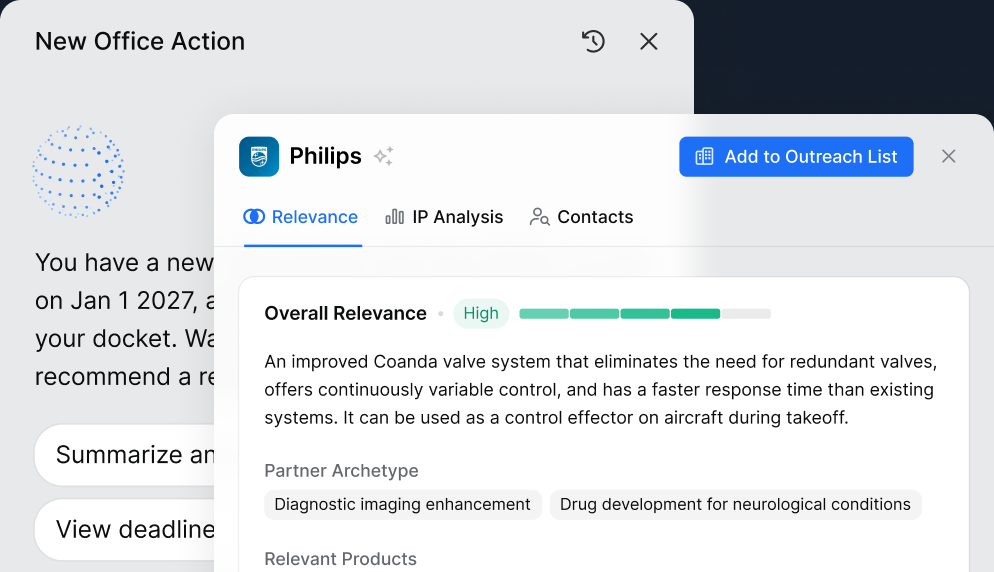

Agentic tools that work with your attorneys to run and scale your IP function.

“Tradespace's AI agents automate routine processes and add information so we can make more informed decisions. It frees up experienced people to make the bigger strategy decisions.”
Alyssa Sandrowitz
Associate General Counsel, Intellectual Property
Woodward

“Our application read like it was written by an attorney who had worked on our portfolio for years. That meant my time went into discussing claim strategy, not explaining what an electrolyzer is.”
Bennett David
Senior Intellectual Property Counsel
Ohmium

“Managing our complex IP lifecycle through Tradespace allows me to keep up with the innovation demand without significant overhead or outside counsel costs. This has led to better quality patents for less money, a win-win all around.”
Jason Tejani
Chief Legal Officer
Enveda Biosciences