Own Your Docket Before It Owns You - Tradespace
The Treasure Hunt

Own Your Docket Before It Owns You

For many in-house legal teams, particularly those in the early stages of portfolio development, allowing outside counsel to maintain the company’s patent docket is a reasonable initial approach to patent management. When the number of active matters remains modest, the administrative burden seems limited and reliance on the firm’s internal system feels efficient. Yet as the portfolio expands, this initial convenience can produce a practical concentration of informational control outside the enterprise, with consequences that become more pronounced over time.

The question of who maintains the docket is ultimately a question of custody and control over the authoritative record of the company’s intellectual property. When that record resides in-house, legal teams are much better able to access it promptly, analyze it meaningfully, and deploy it immediately in response to internal demands.

The Docket as the Authoritative Record

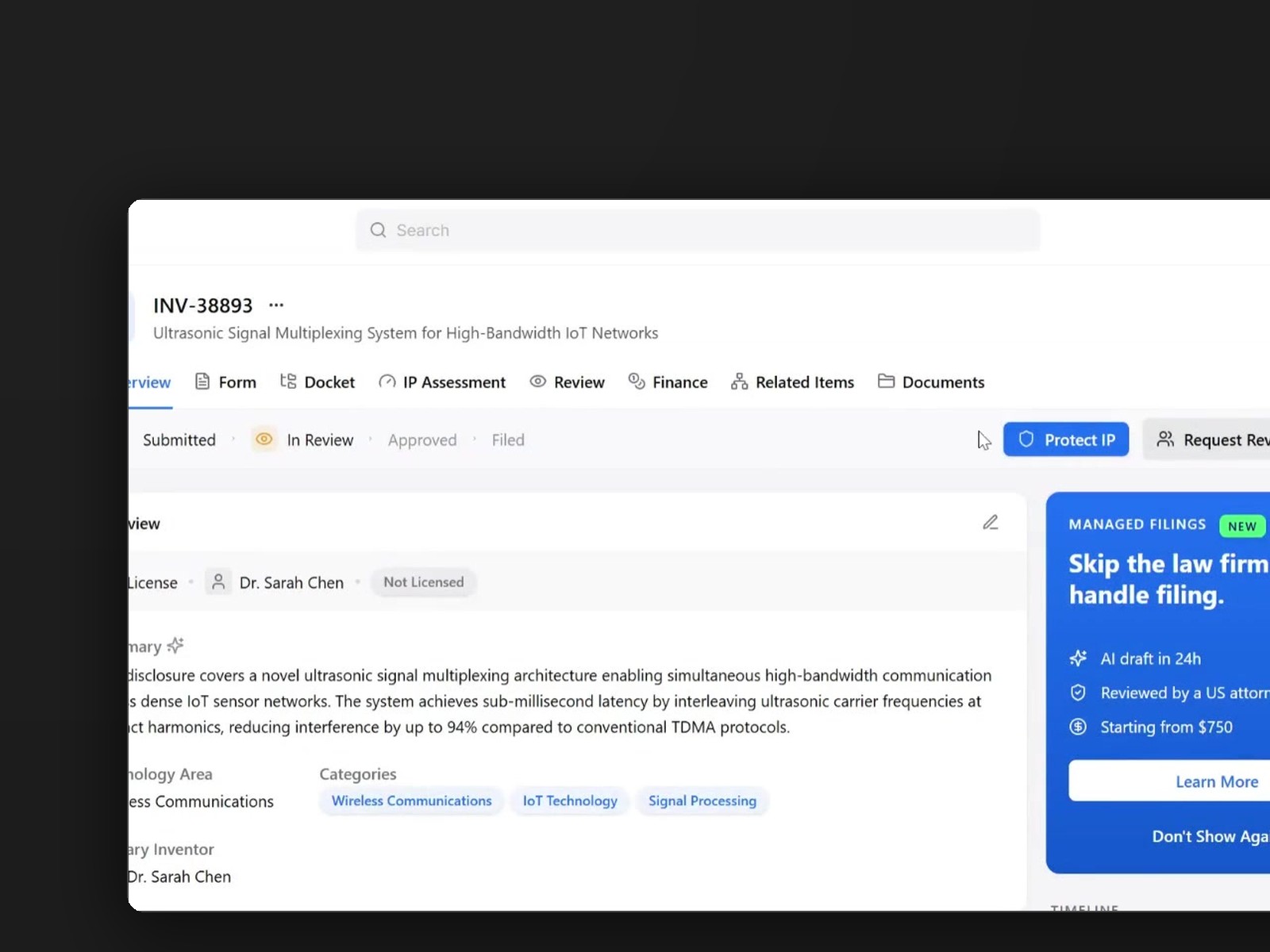
An IP docket is not merely a calendar of deadlines, but the consolidated record of each patent and trademark matter: filing and grant dates, expiration calculations, application and patent numbers, inventor designations, assignment documentation, the application as filed, and the complete history of correspondence with the United States Patent and Trademark Office (USPTO), including office actions, amendments, and responses. When aggregated across hundreds of matters, these records form a substantial and detailed corpus. If that corpus is maintained exclusively within a law firm’s proprietary system, the firm becomes the de facto repository of the company’s portfolio history. 

In practice, companies sometimes find that copies of applications as filed, executed assignments, filing receipts, and prior correspondence are not readily accessible internally, and that verification of even basic information requires a formal request to outside counsel. This arrangement may suffice at small scale, but as the volume of filings increases, the absence of an internally maintained record creates true obstacles to oversight and review.

Executive Reporting and Evidentiary Access

In-house IP counsel routinely field inquiries from senior management that require prompt and accurate responses, such as the number of issued patents, filings in a given fiscal year, aggregate spend by business unit, patents associated with a particular product line, and matters attributable to a specific inventor. When the docket resides mostly or solely in outside counsel’s system, fulfilling these requests requires billable time and delay for the firm to extract and compile the relevant information.

Beyond cost, this arrangement constrains the legal department’s ability to function as an independent source of portfolio intelligence. Many firm-based IP management systems are designed primarily to support prosecution workflow and deadline tracking, and their architecture does not always lend itself to comprehensive portfolio analysis. As a result, the company’s own historical record becomes accessible only through the intermediary that maintains it.

On the contrary, an internally controlled docket permits direct examination of portfolio data, allowing counsel to respond to executive inquiry with speed and precision. An internally controlled docket permits direct and independent examination of portfolio data, which in turn enhances the legal department’s functional role within the enterprise. Rather than simply serving as a conduit between senior management and outside counsel, in-house attorneys are able to interrogate the record themselves, test assumptions, and generate analysis tailored to the specific decision at hand.

For example, when leadership considers divesting a business unit, entering a new market, defending against a competitor, or reallocating R&D resources, the relevant question is rarely limited to raw patent counts; the inquiry requires identifying which assets read on a particular product configuration, which matters remain pending in strategically significant jurisdictions, which inventors are associated with key technologies, or how prosecution history may affect enforceability. An internally maintained docket allows counsel to filter and cross-reference that information quickly and iteratively as the strategic inquiry evolves. This creates advantage not only in speed, but in the ability to conduct deeper analysis, to refine the question as new information emerges, and to integrate portfolio data into broader financial and operational assessments without dependence on external reporting cycles.

The Portfolio as an Analytic Resource

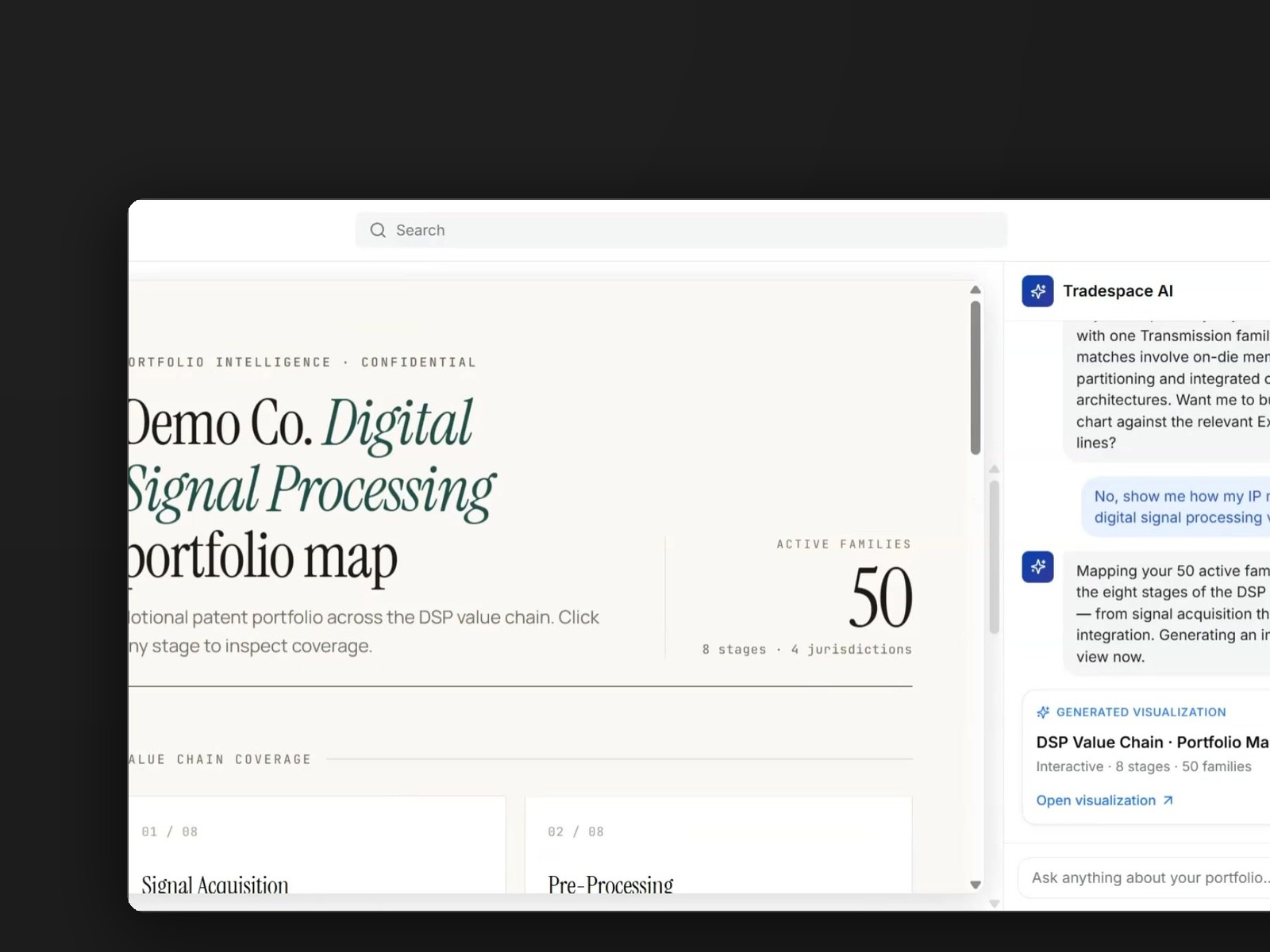
A patent portfolio is a collection of legal rights, but it is also a dataset capable of supporting rigorous analysis. When maintained in a structured internal system, the record enables examination of metrics such as time from invention disclosure to filing, prosecution duration by art unit, distribution of filings across product lines, portfolio coverage in relation to competitor offerings, and alignment of assets with business units under evaluation for sale or reorganization.

These analyses depend on complete and organized information, whereas fragmentation across firm databases and file repositories impedes systematic review. As computational tools become more widely used in legal and corporate settings, the value of structured internal data increases correspondingly, but internal capacity to conduct these analyses presupposes access to the underlying record. Maintaining custody of the docket therefore enhances a company’s ability to assess its portfolio with the same rigor it applies to financial or operational data.

Portability and the Mechanics of Transition

Control of the docket also bears on the company’s freedom to change representation. When a decision is made to retain new counsel, the mechanics of transition depend upon the format and completeness of the data held by the incumbent firm. Alphanumeric data can typically be exported in spreadsheet form, listing application numbers, filing dates, and status fields, but this is insufficient for a complete record. The more demanding component involves the associated documentation, including applications, assignments, office actions, amendments, and related correspondence.

These materials are often maintained in firm-specific file structures rather than in a standardized client-controlled repository. Extracting, organizing, and verifying those documents across a substantial portfolio can require significant coordination and investment of time when a company decides to pull its portfolio back in-house. Although firms cooperate, the process is lengthy and complex, making the process of comprehensive internal recordkeeping more straightforward when it happens at the outset. Consistent internal custody therefore reduces the logistical burden of transition and preserves practical leverage in the event of dissatisfaction with outside counsel performance.

Early Implementation and the Growth of Complexity

Companies with relatively small portfolios often defer the establishment of an internal docketing system, reasoning that the number of active matters does not yet justify the effort. This calculation overlooks the logarithmic rate at which complexity increases. Each additional filing introduces new documents, correspondence, deadlines, and assignment records. Reconstructing an internally maintained record for ten matters may be manageable; reconstructing a record for several hundred matters entails sustained review and data normalization.

Establishing internal control at an early stage avoids the need for a comprehensive data consolidation exercise at a point when the portfolio has already become substantial. For organizations that already maintain extensive portfolios under external management, the considerations differ in degree but not in kind; migration may require planning and staged execution, yet postponement increases the volume of data requiring reconciliation.

Administrative Burden and Shared Maintenance

Many companies share legitimate concerns of limited internal bandwidth, since in-house teams often operate without dedicated docketing staff and must prioritize substantive legal analysis and strategy.

One practical method of addressing this concern involves implementing an internal IP management system while granting outside counsel access to maintain it. During an interim period, the firm may enter information into both its own system and the client’s system. Although this arrangement entails some duplication of effort, the incremental cost is limited when measured against the long-term benefit of retaining authoritative custody of the portfolio record.

Interaction with an Increasingly Digital Patent Office

As patent administration becomes increasingly digital, we are likely to see increased automation in patent prosecution interactions with the USPTO. Internal docketing systems capable of retrieving official correspondence, associating it with the correct matter, and generating corresponding response deadlines will diminish the administrative load. Organizations that maintain internally structured records will be positioned to incorporate automated processes with minimal disruption, whereas companies that depend entirely on external systems will confront the additional task of reconciling data and access at the moment of transition.

Conclusion: Own Your Docket

Custody of the docket bears directly on a legal department’s ability to report with accuracy, conduct meaningful analysis, and respond coherently to procedural developments. Because intellectual property represents a significant corporate asset, the evidentiary record that establishes and defines IP rights requires strong internal stewardship. When the authoritative record is maintained within the enterprise, counsel can verify chain of title, scrutinize prosecution history in anticipation of enforcement or due diligence, evaluate potential litigation exposure, and satisfy regulatory or transactional requests without delay or external dependency. These capabilities are not merely administrative conveniences; they shape asset valuation, inform risk assessment, and preserve strategic optionality. Control of the docket therefore amounts to control of the documentary foundation upon which the company’s patent rights rest, ensuring continuity, clarity, and institutional competence in the management of those rights.