Patent Intelligence Software for Competitive Analysis
June 18, 2026Key Takeaways
Patent intelligence software has moved from a specialist tool used quarterly to an operational asset used continuously. The competitive question is now which platform fits the company’s operating model, not whether to use one.
The category is fragmented. Search-and-retrieval tools (PatSnap, Derwent), analytics platforms (Questel, IPlytics), AI-assisted drafting tools (Solve, DeepIP), and integrated portfolio platforms all market themselves as “patent intelligence.” They solve different problems.
The most common evaluation mistake is buying for capabilities rather than for workflow. A platform with twenty features the team will not use is operationally worse than a platform with five features the team will run weekly.
Competitive analysis is only as useful as the action it triggers. Tools that produce reports nobody reads are an expensive form of theater. Tools that surface actionable decisions get used.
The new frontier in 2026 is integrating competitive intelligence with the company’s own portfolio data and prosecution workflow. Standalone analytics tools produce insights that have to be manually translated into action. Integrated platforms produce insights inside the workflow where the action happens.
For most growth-stage IP teams, the right architecture is one integrated platform handling portfolio management, prosecution, and competitive intelligence in a unified workflow — not a stack of point tools.
What competitive patent analysis actually means
The phrase “competitive patent analysis” gets used loosely. At one extreme, it means running a quarterly landscape report that sits on the IP leader’s desktop and gets opened during board prep. At the other, it means an operating discipline where competitor filings, claim positions, and white spaces inform filing decisions, continuation strategy, and product roadmap conversations on a continuous basis.
The first is a one-time deliverable. The second is an operating system. They are not the same exercise and they do not require the same tooling.
The IP teams that get strategic value from competitive analysis are running the second model. They monitor competitor portfolios continuously. They cross-reference competitor claim positions against their own portfolio in real time. They surface white spaces and gaps as the technology area evolves. The work is not glamorous — it is mostly automated monitoring with quarterly synthesis — but it produces a steady stream of strategic input that informs the rest of the IP function.
This guide covers what to look for in software that supports this operating model. It is aimed at IP leaders at growth-stage IP-intensive companies — Series B to pre-IPO — evaluating tools as part of a broader operating model investment, not as a one-time procurement.
What patent intelligence software actually does
The category is fragmented and the marketing language is interchangeable across substantially different products. The underlying capabilities cluster into five functional areas:
- Search and retrieval. Indexing patents across jurisdictions, supporting keyword, semantic, and classification-based search. The historical core of the category.
- Landscape analysis. Aggregating search results into visual representations — filing trend lines, jurisdiction distributions, assignee rankings, technology classification heat maps.
- Claim and entity analytics. Extracting structured data from patent claims, mapping ownership networks, tracking competitor filing patterns over time.
- AI-assisted analysis. Using language models to summarize patent disclosures, extract inventive concepts, suggest claim mappings, and answer natural language queries about portfolios.
- Workflow integration. Connecting the analytical output into the team’s actual operating workflow — prosecution decisions, continuation filings, portfolio reporting.
Most platforms do some of these well and others poorly. The honest evaluation starts with which capabilities the team will actually use weekly, not which capabilities the platform demonstrates impressively.
The six things competitive patent analysis should actually produce
Software is a means, not an end. The output that justifies the spend is operational signal that informs decisions. The six outputs below are the ones that consistently produce value at IP-intensive companies.
Competitor filing monitoring
Continuous monitoring of named competitor portfolios, with alerts when new applications publish, when grants issue, or when filing patterns shift materially. The leverage is in catching strategic moves early — a competitor entering a new technology area, building out coverage on a specific feature, or pivoting away from a previously active area.
The implementation is straightforward in principle. Define the watch list of competitors. Define the technology areas of interest. Define the alert thresholds. Let the platform run. The pitfall is alert fatigue: monitoring that produces too many low-signal alerts gets ignored. Calibration matters more than coverage.
White space and gap identification
Mapping the technology landscape to identify areas where filings are sparse, where coverage is concentrated, and where the company’s own portfolio has gaps relative to its product roadmap. The output is strategic input for filing decisions — where to push new disclosures, where to expand continuation strategy, where to design around competitor coverage.
White space analysis is meaningfully more useful when grounded in the company’s product roadmap rather than run abstractly. Generic white space across a broad technology area produces interesting maps and few actionable filings. White space mapped against next-quarter product features produces filing recommendations.
Claim-level competitive overlap
Comparing the claim scope of competitor patents against the company’s own portfolio and product line. Where do competitor claims read on what the company is shipping. Where do the company’s claims read on competitor products. Where do claim positions create freedom-to-operate questions worth investigating.
This is the analysis that informs the highest-value decisions — design-around investments, continuation strategy, licensing approaches, enforcement considerations. Manually, it is consultant-grade work. With AI-assisted tooling, it becomes a quarterly internal exercise.
Technology trend analysis
Tracking filing volume, classification distribution, and assignee patterns over time to identify where the technology area is moving, what subdomains are heating up, and where the company should be positioning. Less tactical than competitor monitoring; more strategic than landscape mapping.
The output here informs longer-horizon decisions — which research areas to invest in, which adjacencies to enter, how to position upcoming product launches in the IP landscape.
Inventor and assignee network analysis
Mapping inventor movement, assignee acquisitions, and licensing relationships to understand which players are building, which are buying, and which are exiting. Useful for M&A target identification, recruiting signals, and licensing target identification.
This is the least-used output category in most IP functions. It produces actionable signal when used by a team with explicit business development or M&A involvement. For pure-defensive IP operations, it is often more interesting than necessary.
Diligence-ready exports
The mundane but consequential output: when the company faces an external IP review — fundraise diligence, M&A diligence, partnership negotiation — the platform should produce clean export packages combining the company’s own portfolio data with the competitive landscape context. The historical alternative is weeks of manual assembly.
Where patent intelligence software commonly falls short
The failure patterns below recur across platforms and customers. They cluster — a tool with one of these problems usually has at least three.
- Feature-rich, workflow-poor. The platform demonstrates impressively in evaluation. The output produces reports that have to be manually translated into action. The team uses it for the first three months and gradually stops opening it.
- Search-strong, analytics-weak. The platform is excellent at retrieving patents but produces shallow analytics on top of the retrieval. Useful for one-off searches; useless for continuous operating signal.
- Generic analytics with no portfolio context. The competitive landscape views are generated against the platform’s standard data and do not connect to the company’s own portfolio. The output is interesting in isolation and useless for decision-making.
- AI summarization with no validation path. The platform produces AI-generated summaries of competitor patents but does not surface the underlying claims, prior art, or prosecution history when the team needs to validate the summary. AI output without verification produces decisions based on hallucinations.
- Reporting that captures activity, not action. Quarterly reports describe what happened in the landscape. They do not connect to the company’s filing decisions, continuation strategy, or product roadmap. The reports get produced; nothing changes downstream.
What to look for in patent intelligence software in 2026
The category has matured. The marketing language has not. Three shifts in 2026 reshape what serious evaluation looks like.
Integration with the operating workflow
The historical pattern was standalone analytics tools that produced reports the IP team manually translated into action. The pattern that scales in 2026 is competitive intelligence embedded in the operating workflow — surfaced inside the platform where prosecution decisions, continuation filings, and portfolio reviews actually happen.
The evaluation question shifts. Not “does this tool produce good competitive analysis,” but “does this tool’s analysis surface at the moment the team is making the decision the analysis should inform.” A standalone tool with excellent analytics is operationally weaker than an integrated platform with adequate analytics, because the integrated platform produces decisions and the standalone tool produces reports.
AI-assisted analysis at portfolio scale
Two years ago, claim-level competitive overlap analysis was consultant-grade work that ran annually. With AI-assisted analytics, it has shifted to a quarterly internal exercise running against the company’s full portfolio. The implication: tools that do not support AI-assisted analysis at portfolio scale are operating one generation behind the market.
The validation requirement matters here. AI-assisted analysis without verification paths produces confident-sounding output that may be wrong. The strong platforms surface the underlying patents, claims, and reasoning behind every AI-generated insight, so the team can validate before acting.
Outcome metrics, not activity metrics
The historical evaluation pattern compared platforms on feature counts and demo impressiveness. The pattern that produces actual return on investment compares platforms on outcome metrics — does the team make different filing decisions because of the platform, does continuation strategy actually shift in response to insights, does the diligence-ready export package actually produce in hours rather than weeks.
Evaluations grounded in outcome metrics produce different platform choices than evaluations grounded in feature lists. The platforms that demonstrate impressively often produce limited operational change. The platforms that look modest in demonstration but slot cleanly into the operating workflow often produce material change.
How Tradespace approaches competitive patent analysis
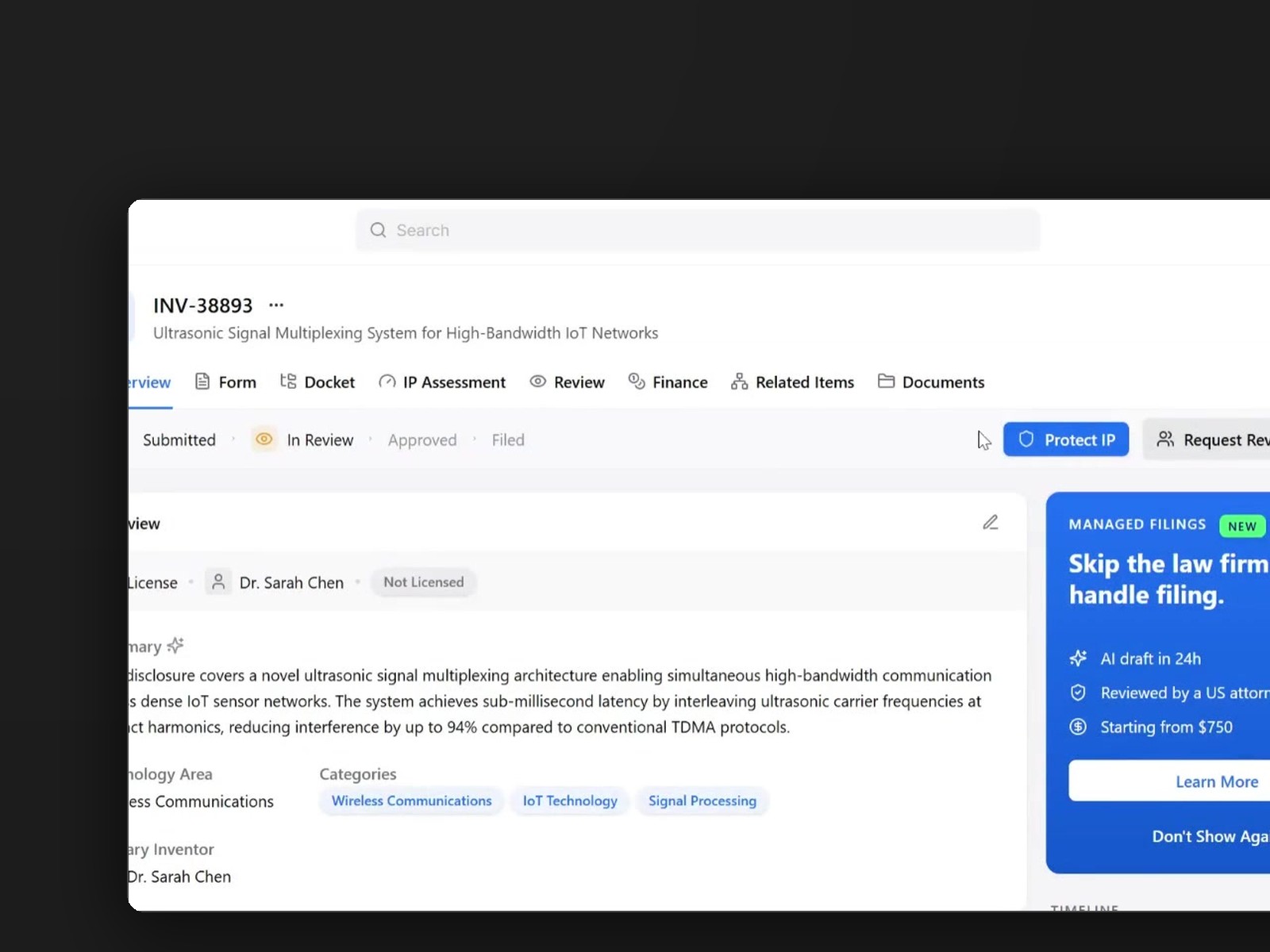
Tradespace embeds competitive intelligence inside the same platform that handles portfolio management, prosecution, and reporting. The integration matters because the alternative — a standalone analytics tool producing reports for the IP team to manually translate into action — produces operational friction that erodes the analysis’s value over time.
What this enables operationally:
- Continuous competitor monitoring with calibrated alerts. Named competitor portfolios get monitored continuously. Material changes surface as alerts in the team’s existing workflow, not in a separate notification system that adds inbox load.
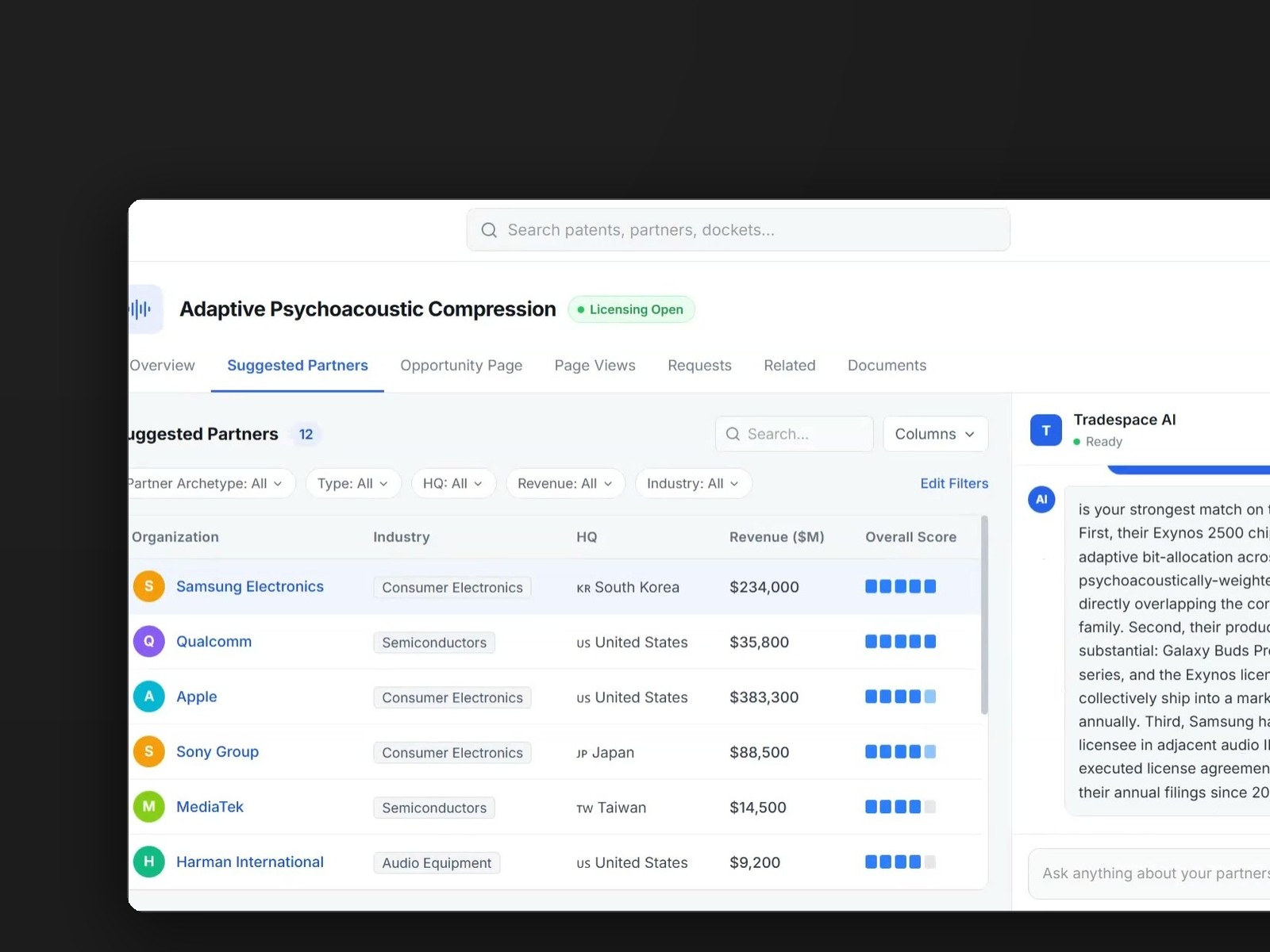
- Claim-level overlap analysis on demand. Comparing competitor claim scope against the company’s portfolio runs as a built-in capability rather than as a consultant engagement. The output surfaces inside the portfolio view where the team is already working.
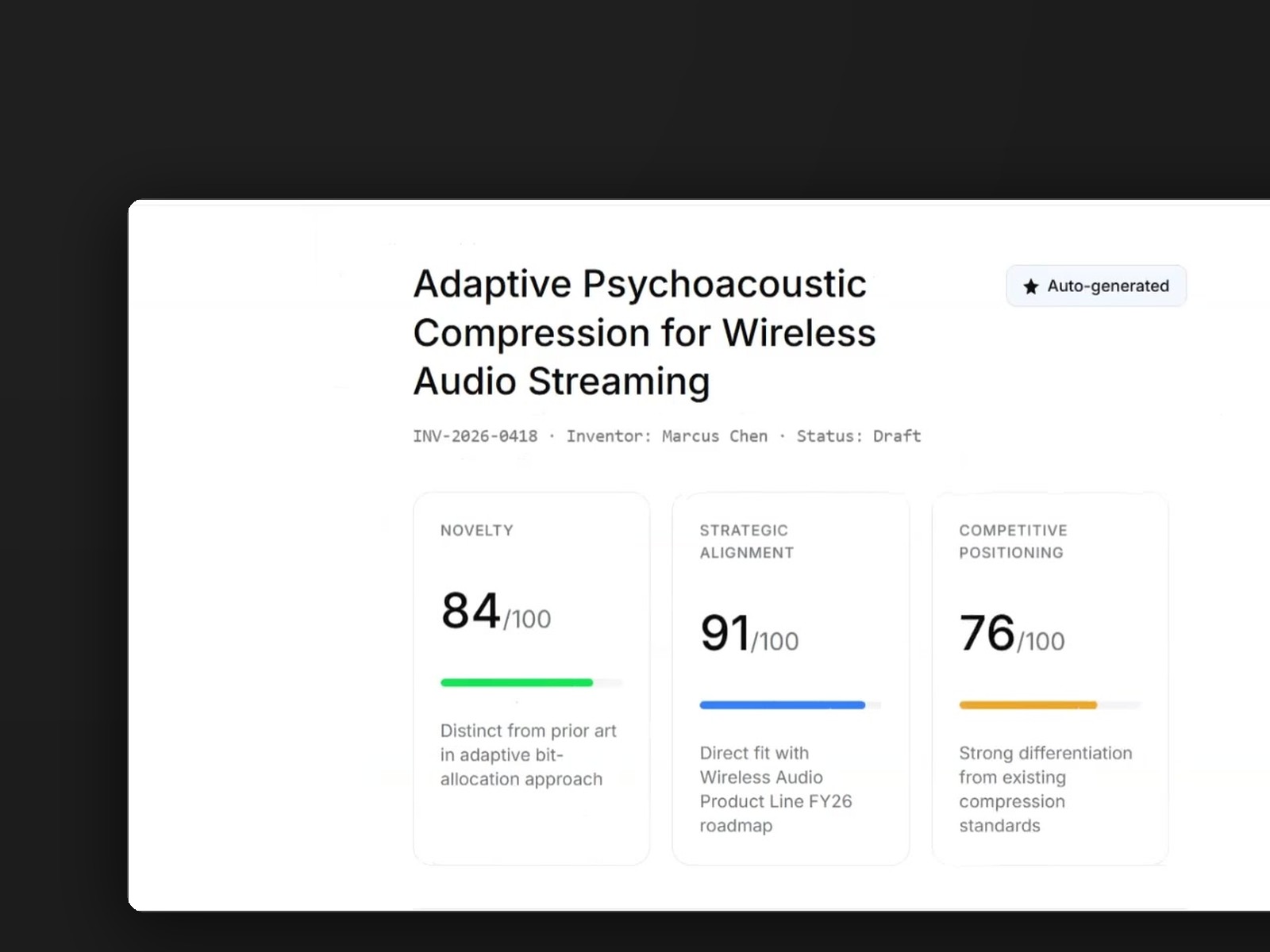
- White space mapped against product roadmap. White space analysis pulls from both the broader landscape and the company’s documented product roadmap, producing filing recommendations rather than abstract maps.
- AI-assisted analysis with verification paths. Every AI-generated insight surfaces with the underlying patents, claims, and reasoning attached. The team can validate before acting.
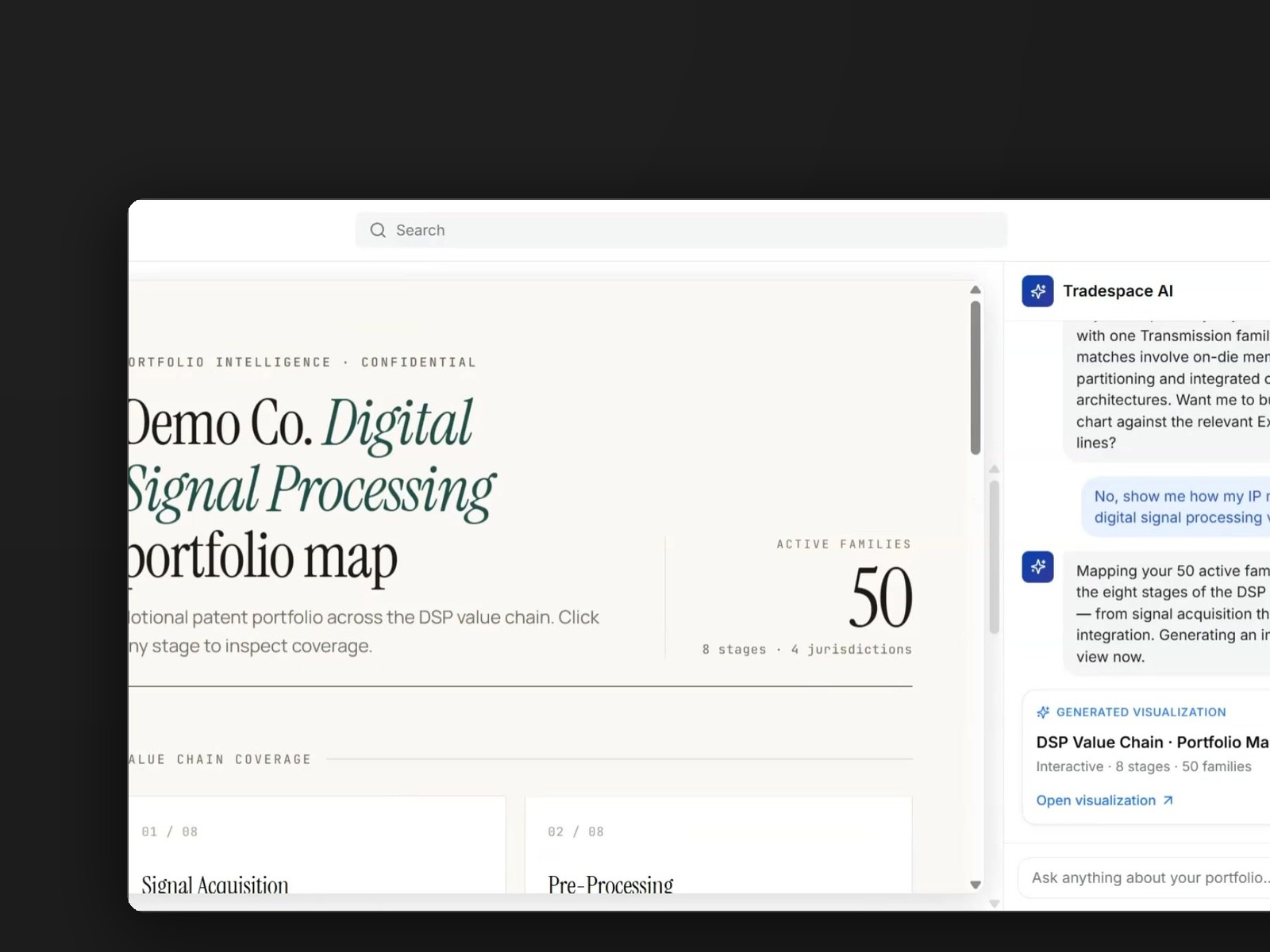
- Diligence-ready exports. Competitive landscape context, portfolio coverage maps, and prosecution history combine into export packages on demand. The historical weeks of manual assembly become hours.
- Outcome reporting. Quarterly review reports tie competitive intelligence to actual filing decisions, continuation moves, and portfolio strategy adjustments. The reports show what changed because of the intelligence, not just what the intelligence said.
The shorthand: competitive analysis is part of the operating workflow rather than a separate exercise that produces reports.
How to implement competitive patent analysis in practice
For a team running ad hoc competitive analysis or no formal program at all, the implementation arc below has been the fastest path to a working operating model.
Phase 1: Assessment (months 1-2)
The first two months establish what the team actually needs and where the current state falls short.
- A documented list of named competitors and adjacent players worth monitoring
- A documented set of technology areas and product features where coverage matters
- An audit of any existing competitive analysis activity — how often, who runs it, where the output goes
- A list of the strategic decisions the team is currently making without competitive intelligence input — and the cost of making them blind
Phase 2: Foundational investment (months 3-6)
Months three through six establish the operating program.
- Platform selection based on integration with the existing IP operating workflow
- Watch list configuration for named competitors, technology areas, and alert thresholds
- Initial claim-level overlap analysis against the current portfolio and product line
- White space analysis tied to the next-twelve-months product roadmap
- Reporting templates that connect competitive intelligence to filing decisions and continuation strategy
Phase 3: Continuous operation (month 7 and beyond)
By month seven the program runs continuously.
- Weekly review of competitor monitoring alerts, with documented action or non-action decisions
- Monthly claim-level overlap refresh as new competitor patents publish and grant
- Quarterly white space refresh tied to product roadmap updates
- Quarterly strategic review with product and business development teams, with competitive intelligence as input
- Annual platform performance review against outcome metrics
Common implementation pitfalls
The pitfalls below recur. They are not catastrophic individually but they erode the value of the program over time.
- Buying for features rather than for workflow. A platform with twenty capabilities the team will not use is operationally worse than a platform with five capabilities the team will use weekly.
- No connection between intelligence and decisions. The team produces quarterly competitive reports. Filing decisions, continuation strategy, and product roadmap conversations continue to happen without the reports as input. The intelligence does not change outcomes.
- Alert fatigue from un-calibrated monitoring. The watch list is too broad. Alerts fire constantly on low-signal events. The team disables notifications. The monitoring stops producing value.
- AI-generated output trusted without validation. Summaries of competitor patents get acted on without checking the underlying claims. Decisions get made on hallucinated content. Trust in the platform erodes when the inevitable mistake surfaces.
- Standalone analytics disconnected from portfolio data. The competitive intelligence runs against the platform’s standard data. The IP team’s own portfolio data is not in the same system. Translating between the two adds manual work that the program was supposed to eliminate.
Measuring competitive analysis effectiveness
The metrics below tell the executive team whether the program is producing strategic value or just generating reports.
- Number of filing decisions per quarter informed by competitive intelligence. Direction matters: a working program produces measurable input into filing decisions. A theater program produces reports that do not connect to decisions.
- Time from competitor filing publication to internal awareness. A working monitoring program surfaces material competitor activity within days. A weak one surfaces it months later or never.
- Diligence response time. How long, from a board or investor ask for competitive context, to a complete export package. A working program produces it in hours. A struggling one produces it in weeks.
- White space conversion rate. Percentage of identified white space areas that produce filings or strategic decisions within the following two quarters. A working program produces meaningful conversion; a theater program produces analysis that goes nowhere.
- Stakeholder usage. Are product and business development teams asking for the intelligence, or is the IP team pushing it. Pull is the indicator that the intelligence is producing value.
Building your competitive intelligence program
For a team starting from ad hoc analysis or no formal program, the sequence below has been the fastest path to a working operating model.
- Document the competitor watch list before evaluating platforms. The list should reflect strategic priorities, not exhaustive landscape coverage.
- Document the strategic decisions the program should inform. Filing decisions, continuation strategy, product roadmap input, M&A targeting. Without the decisions defined, the intelligence has no destination.
- Evaluate platforms against integration with the existing workflow, not against feature lists. The integration question determines whether the program will produce decisions or just reports.
- Start with one or two competitor monitoring use cases. Expand only after the initial use cases are producing measurable signal.
- Build the connection between intelligence and decisions into the operating cadence from day one. Without the connection, the program drifts into report production within two quarters.
A pressure-test for your current competitive intelligence program
The questions below are diagnostic. The honest answers tell an IP leader where the program is mature and where the next quarter’s work should focus.
- For every patent your team filed last quarter, can you name the competitive context that informed the filing decision?
- When did you last change a continuation strategy in response to a competitor filing?
- If a competitor filed a patent that read on something your team is shipping, would you find out from your monitoring, from a search, or from a lawsuit?
- How many of your white space analyses from the past year have produced filings or strategic decisions?
- If the CEO asked tomorrow for a competitive IP landscape briefing, how long would the work take?
The takeaway
Patent intelligence software is operationally useful when it produces decisions and operationally expensive when it produces reports. The category has matured to the point where the question is no longer whether to use a platform but which one fits the operating workflow.
The evaluation discipline is to test platforms against outcomes rather than against features. Does the platform’s analysis surface inside the team’s existing workflow at the moment of decision. Does the AI-assisted output come with the verification paths the team needs to act on it. Does the platform connect competitive intelligence to the company’s own portfolio data and prosecution workflow. The platforms that pass this test produce different operating outcomes — more filing decisions informed by competitive context, faster diligence response, continuation strategy that adapts to landscape shifts. The platforms that fail it produce expensive reports.
What is patent intelligence software?
Patent intelligence software is a category of tools that index, analyze, and visualize patent data across jurisdictions. The capabilities range from basic search and retrieval to AI-assisted landscape analysis, claim-level competitive overlap, and integrated portfolio management. The category is fragmented; different platforms emphasize different capabilities and the marketing language often overlaps even when the underlying functionality differs substantially.
How is patent intelligence different from patent search?
Patent search is the act of retrieving relevant patents from the broader patent corpus. Patent intelligence is the broader discipline of turning patent data into operational signal — competitive monitoring, landscape analysis, claim-level overlap, strategic decision support. Search is one component of intelligence. A platform that does search well but stops there is a search tool, not an intelligence platform.
What's the difference between patent intelligence software and an IP management system?
IP management systems are operational platforms for docketing, prosecution coordination, annuity payments, and portfolio reporting. Patent intelligence software is focused on analysis of the patent landscape — both the company’s own portfolio and the broader competitive context. The two categories historically operated as separate stacks. In 2026, integrated platforms increasingly combine both into a single operating system.
How much does patent intelligence software cost?
Pricing varies widely. Standalone search-and-retrieval tools start in the low five figures annually. Enterprise analytics platforms can run $50,000-$200,000+ per year, often with additional implementation costs. Integrated platforms that combine portfolio management with competitive intelligence price across a similar range depending on portfolio size and feature set. The right evaluation question is total cost of ownership, including the operational time saved or required by the platform’s integration profile.
Can patent intelligence software replace outside counsel for competitive analysis?
For most strategic intelligence work — competitor monitoring, landscape analysis, white space identification, claim-level overlap — modern platforms have substantially reduced the dependence on outside consulting. For specific high-stakes decisions like freedom-to-operate opinions or litigation-grade infringement analysis, outside counsel judgment is still appropriate. The shift is in where the boundary sits: more work is now operationally tractable in-house than was true even three years ago.
What's the role of AI in competitive patent analysis?
AI handles three primary capabilities: summarization of patent disclosures at scale, claim mapping and competitive overlap analysis across portfolios, and natural language querying of patent data. AI does not replace the strategic judgment of an experienced IP practitioner. It compresses the manual work that previously made strategic analysis expensive enough to run only periodically, allowing the same analysis to run continuously.
How does competitive patent analysis fit into portfolio strategy?
Competitive analysis is one of the strategic inputs that informs filing decisions, continuation strategy, product roadmap conversations, and pruning decisions. A portfolio strategy operating without competitive intelligence is flying half-blind on the strategic dimensions that matter. The piece on best strategies for patent portfolio management covers how competitive intelligence connects to the broader operating model.
How often should competitive patent analysis be refreshed?
The right cadence depends on the type of analysis. Competitor filing monitoring should run continuously, with alerts surfacing material activity within days. Claim-level overlap analysis can run monthly or quarterly as new patents publish and grant. Landscape trend analysis runs quarterly or semi-annually. White space analysis ties to the product roadmap cadence, typically quarterly. The mistake to avoid is running every analysis at the same cadence — some require continuous monitoring, others require periodic synthesis.
What's the difference between patent intelligence software and AI patent drafting tools?
Patent intelligence software focuses on analysis of the patent landscape and the company’s own portfolio. AI patent drafting tools focus on generating draft applications and claims. The two categories address different problems but increasingly converge in integrated platforms that combine both. The strongest operating models pair intelligence (knowing what to file and why) with drafting capacity (producing the filings at scale) inside the same workflow.
How do I evaluate patent intelligence software for my company?
Evaluation should start with the operating decisions the platform needs to inform — filing decisions, continuation strategy, competitive monitoring, diligence preparation — rather than with feature lists. Test the platform’s output against the workflow where the decisions actually happen. Does the analysis surface inside the team’s existing operating system, or does it produce reports that have to be translated into action. Does the AI output come with verification paths. Does the platform integrate with the company’s own portfolio data. The platforms that pass this test produce different outcomes from the platforms that demonstrate impressively in evaluation but operate in isolation from the team’s actual workflow.